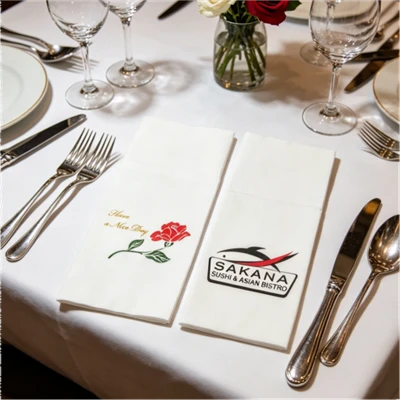
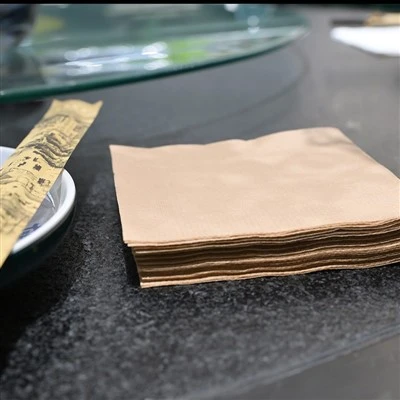
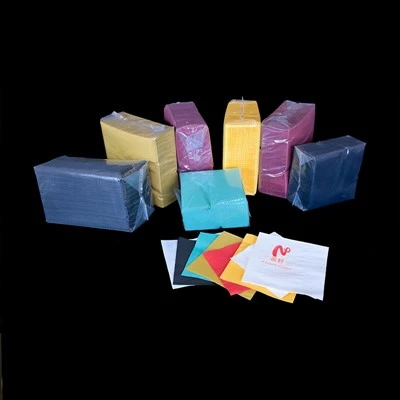
Napkins and paper towels fall into two general categories: Dry and wet. The dry variety-which we commonly use to replace handkerchiefs or cloth towels-goes by a variety of names, such as pocket tissues, facial tissues, dinner napkins, hand towels, scented tissues, and general paper towels. All of these products are manufactured using creped paper as the raw material and come in diverse packaging formats, including bags, boxes, canisters, and rolls. These products typically do not undergo sterilization treatment; however, provided that the manufacturing environment and raw materials are clean and hygienic, the finished products can fully meet national hygiene standards. Therefore, when making a purchase, it is essential to select products that bear a valid hygiene license and clearly display the manufacturer's name, address, production date, and expiration date; do not be tempted by low prices to purchase products manufactured by unregulated, "underground" workshops. Generally speaking, these products are suitable for cleaning the face, hands, and other objects, but they should not be used to clean or disinfect tableware. Furthermore, the quality of these products varies significantly; it is best to choose those with a fine, dense texture that possess good tensile strength and resist crumpling.
Wet wipes are broadly classified into two types: Those with disinfecting properties and those without. The former can be used to disinfect tableware, fruit surfaces, hands, and similar items, while the latter serve a purely cleaning function and offer no disinfecting capabilities. This product category encompasses various items-such as wet wipes, wet towels, and wet facial cloths-and comes in formats ranging from individually wrapped packets to multi-pack resealable pouches and canisters. When using disinfecting wipes, two key points must be kept in mind: first, the specific wipe being used must be effective against the particular microorganisms one intends to eliminate; and second, the treated surface must remain moist for a specific duration. Different microorganisms exhibit varying degrees of resistance to disinfectants; consequently, any product capable of killing the hepatitis virus must explicitly state this capability in its usage instructions or on its outer packaging. If no such claim is present, it indicates that the product is ineffective against the hepatitis virus. Consumers should therefore carefully read the instructions when making a selection, rather than assuming that any product labeled as a "disinfecting wipe" is capable of killing all bacteria and viruses. Furthermore, to achieve an effective disinfecting result, the treated surface must remain fully moist for a specific period of time (as specified in the product instructions); consequently, a wet wipe that has dried out will no longer provide any disinfecting benefit. Finally, it is important to note that disinfecting wipes are primarily intended for 'preventive' disinfection. In situations involving known cases of infectious disease, it is highly recommended to use a liquid disinfectant solution to thoroughly soak and sterilize tableware instead. Wet wipes fall into two categories: those with disinfecting properties and those without. The former can be used to disinfect items such as tableware, fruit surfaces, and hands, whereas the latter serve a cleaning purpose only and possess no disinfecting capabilities. This product category encompasses various types-including wet wipes, wet towels, and wet facial cloths-and is available in formats ranging from individually wrapped packets to multi-pack resealable pouches and canister dispensers. When using disinfecting wipes, two key points must be observed: first, the specific wipe used must be effective against the particular microorganisms one intends to eliminate; and second, the surface must remain moist for a specific duration to ensure efficacy. Different microorganisms exhibit varying degrees of resistance to disinfectants; consequently, products capable of killing hepatitis viruses should explicitly state this on their usage instructions or outer packaging. If no such claim is present, it indicates that the product is ineffective against hepatitis viruses. Consumers should therefore carefully read the instructions when making a purchase, rather than assuming that any product labeled as a "disinfecting wipe" is capable of killing all types of bacteria and viruses. Furthermore, to achieve a disinfecting effect, the treated surface must remain thoroughly moist for a specific period (as specified in the product instructions). Consequently, a dried-out wipe is no longer capable of performing a disinfecting function. Finally, it is important to note that disinfecting wipes are primarily intended for preventive disinfection; in instances involving known cases of infectious disease, it is advisable to use a liquid disinfectant to thoroughly soak and sanitize tableware.