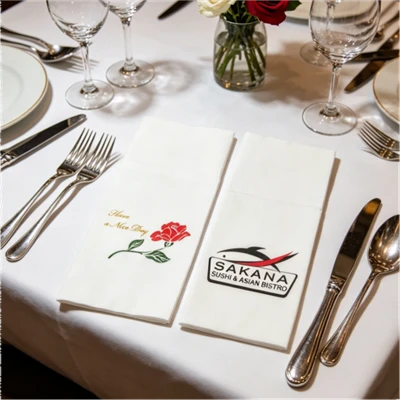
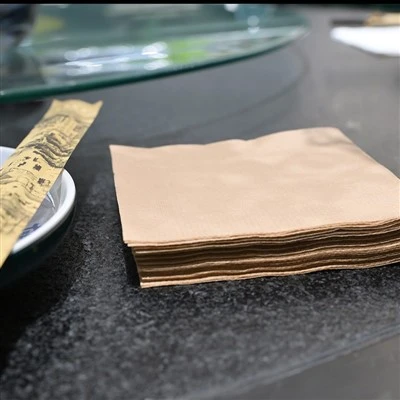
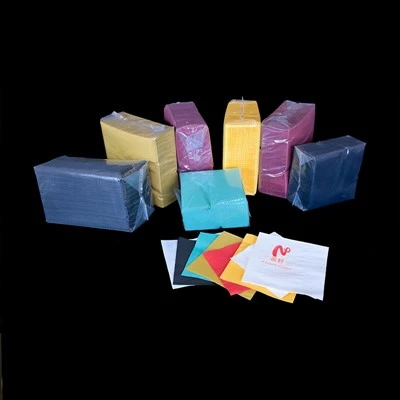
Napkins come in a variety of materials, including pure cotton, cotton-linen blends, synthetic fibers, Visa fabric, and paper. Pure cotton and cotton-linen blend napkins offer strong absorbency, a pleasant tactile feel, and rich colors; however, they are prone to fading, lack crispness, and require starching after every wash, with an average lifespan of 4 to 6 months. Synthetic fiber napkins are sturdy, durable, and moderately priced, though stains on them can be difficult to remove. Visa napkins feature vivid, rich colors, maintain a crisp shape, are easy to wash, resist fading, and are highly durable; however, they have poor absorbency and a higher price point, with an average lifespan of 2 to 3 years. Paper napkins are disposable and low-cost; they are typically used in fast-food establishments and group dining facilities.
The fundamental uses of a napkin include protecting clothing, wiping the mouth, discreetly covering the mouth, and conveying specific signals. Spreading the napkin flat across one's lap serves primarily to protect one's clothes. Before engaging in conversation during a meal, one should gently wipe one's mouth with the napkin; however, the napkin should not be used to wipe away sweat or wipe the face, and using it to wipe one's hands should also be avoided whenever possible. Furthermore, one should never use the napkin to wipe cutlery. When performing actions such as picking one's teeth during a meal, one should use the left hand to hold the napkin up to cover the mouth. Napkins can also be utilized to convey various specific signals, including indicating the start of a meal, the conclusion of a meal, or a temporary departure from the table.